 ≡
≡
quiz
Michael JacksonProve your knowledge in the Arena
Do you really know the King of Pop?
Michael Jackson conquered the world with unparalleled talent. But what lies behind the legend?
Why test your knowledge?
Testing your knowledge improves memory, quick thinking, and the ability to make associations, as well as being a fun way to learn while competing with other people.
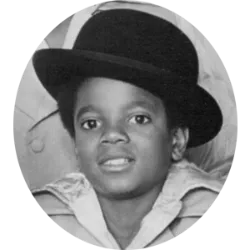
The Rise of the Jackson 5
Michael Jackson’s early rise was not just a matter of luck, but a combination of raw talent, military-like discipline, and the influence of the Motown label.
The Brothers’ Group (1964 - 1967)
The Origin: The group began as The Jackson Brothers, formed by Jackie, Tito, and Jermaine.
Michael’s Entry: Michael and Marlon joined later.
Initially, Michael played congas, but his vocal talent and ability to imitate James Brown quickly made him the lead singer at just 8 years old.
The “Chitlin’ Circuit”: Before fame, they performed in small clubs and talent shows in Gary, Indiana, gaining stage experience under their father’s strict supervision.
Discovery by Motown (1968)
Myth vs. Reality: Although the official story says Diana Ross discovered them, it was actually Gladys Knight and Bobby Taylor who brought the group to the legendary Motown label.
Move to L.A.: Berry Gordy, Motown’s owner, saw in Michael something he had never seen before: a child with the soul of a veteran performer.
The Historic Record (1969 - 1970)
The Jackson 5 became the first group in history to have their first four singles reach #1 on the Billboard charts: I Want You Back, ABC, The Love You Save, and I’ll Be There
Joe Jackson’s Discipline:
Iron Rehearsals: While other children played, Michael rehearsed for hours. Joe Jackson watched with a belt in hand; any choreography mistake resulted in physical punishment.
Psychological Impact: This period created Michael’s technical perfection, but also his extreme shyness and the feeling of never having a normal childhood.
The Transition to a Solo Career
The First Step: In 1971, while still in the Jackson 5, Michael released “Got to Be There”.
Autonomy: The need to express himself beyond Motown formulas led him to Quincy Jones years later, marking the end of his “child” phase and the beginning of the Off the Wall era.
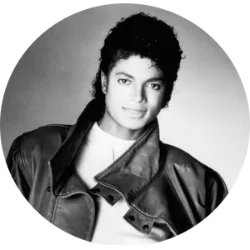
The First Solo Success
Although Michael was still part of the group with his brothers, 1972 marked the moment when the world realized he had his own distinct and magnetic artistic identity.
Top of the Charts at 14
The Record: With the song "Ben," Michael Jackson achieved his first number 1 on the Billboard Hot 100 as a solo artist.
Significance: It was definitive proof that he could shine and sustain success beyond the Jackson 5 brand.
An Unusual Song: The Pet Rat
The Context: The song was written as the main theme for the horror film Ben (a sequel to Willard), which told the story of a boy and his killer pet rat.
The Delivery: Despite the bizarre theme for a ballad, Michael’s performance was so tender and emotional that it transformed a song about a rodent into an anthem about friendship and loneliness.
Academy Recognition (Oscars)
"Ben" not only dominated the airwaves, but also earned Michael his first nomination for the Academy Award for Best Original Song and a Golden Globe win.
His performance at the 1973 Academy Awards is considered one of the most iconic moments of his “pre-adult” phase.
The Reflection of Loneliness
Many biographers point out that Michael genuinely identified with the lyrics: "Ben, most people would turn you away / I don't listen to a word they say".
The song reflected his own difficulty in making friends his age due to extreme fame, finding comfort in the animal world.


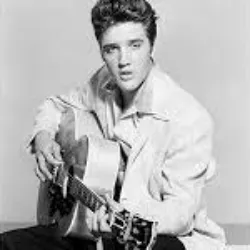











Discover some interesting facts about Michael Jackson
Meeting Quincy Jones

The Turning Point in "The Wiz" (1978)
If there is a precise moment when the “King of Pop” began to take shape, it was behind the scenes of The Wiz (an urban, all-Black cast version of The Wizard of Oz).
The Role of the Scarecrow
The Choice: Michael fought for the role of the Scarecrow. He wanted to prove he could act and move differently from his image in the Jackson 5.
Extreme Dedication: Michael was the first to arrive and the last to leave.
He even slept in his Scarecrow makeup to stay in character, demonstrating the perfectionism that would become his trademark.
The Meeting of Minds: Michael and "Q"
The Mentor: Quincy Jones was the film’s musical supervisor. During production, he was impressed by Michael’s work ethic and his ability to memorize not only his own lines, but those of the entire cast.
The Request for Help: One day, Michael approached Quincy and asked if he could recommend a producer for his next solo project. Michael felt he needed a more sophisticated and less “childlike” sound than Motown.
The Historic Response: Quincy, sensing the untapped potential of that 19-year-old, simply replied: “Michael, I’d like to give it a try.”
The Birth of "Off The Wall"
Breaking Barriers: Many in the industry believed Quincy (known for Jazz) and Michael (the “former Motown kid”) wouldn’t work together. They proved otherwise.
The Result: In 1979, they released Off the Wall, the first solo album to produce four Top 10 singles. This was when Michael stopped being a “teen idol” and became a globally respected artist.
The Album That Broke All Records

Released on November 30, 1982, Thriller was not just an album; it was a cultural event that changed the music industry forever. With impeccable production by Quincy Jones, Michael Jackson achieved what no other artist had ever accomplished.
The Unreachable Record
Global Sales: With over 70 million copies sold, it holds the title of the best-selling album of all time according to the Guinness World Records.
Chart Dominance: The album remained in the Top 10 of the Billboard 200 for 80 consecutive weeks, with 7 of its 9 tracks released as singles and all reaching the Top 10.
Breaking Racial Barriers
MTV: Before Michael, MTV rarely featured Black artists. The massive success of "Billie Jean" and "Beat It" forced the channel to open its doors to Black musicians, changing the landscape of television entertainment.
Rock Meets Pop: By inviting Eddie Van Halen to perform the guitar solo on "Beat It," Michael united Rock and R&B audiences, eliminating genre divisions.
The "Thriller" Short Film
Visual Revolution: The 14-minute Thriller video, directed by John Landis, transformed the music video into a cinematic art form.
Economic Impact: It was the first video to have a commercially released “making of,” selling millions of VHS tapes and creating a new market for the industry.
The Night of 8 Grammys
At the 1984 ceremony, Michael Jackson set a record by winning 8 awards in a single night, including Album of the Year at the Grammy Awards. It was the moment when his coronation as the “King of Pop” became undeniable to critics.
The Day Everything Changed
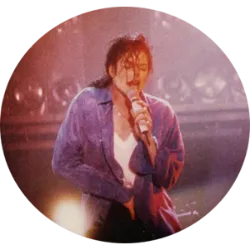
At the peak of Thriller’s success, on January 27, 1984, a catastrophic accident during the filming of a commercial for Pepsi-Cola permanently changed the course of Michael Jackson’s life and health.
The Pyrotechnic Incident
The Error: During the sixth take of the scene, the pyrotechnic effects were triggered too early. Sparks hit Michael’s hair, which was covered in hairspray (a highly flammable product).
The Professional Reaction: Michael continued dancing for a few seconds without realizing his hair was on fire. Only when security and his brothers rushed to help did he notice the severity of the situation.
Second and Third-Degree Burns
Permanent Damage: Michael suffered severe burns to his scalp. The trauma was so intense that it destroyed hair follicles, forcing him to wear wigs and hairpieces for the rest of his life to conceal the scars.
The Humanitarian Gesture: Despite the accident, Michael did not keep the multimillion-dollar compensation from Pepsi. He donated $1.5 million to create the Michael Jackson Burn Center, a treatment center for burn victims.
The Beginning of Painkiller Dependence
Chronic Pain: To treat the burns and undergo multiple reconstructive surgeries, Michael began taking strong painkillers.
The Dark Side of Recovery: This is considered the starting point of his lifelong struggle with medication dependence, which unfortunately would culminate in his premature death years later.
The Acceleration of Aesthetic Changes
Post-traumatic stress and successive reconstructive scalp surgeries led Michael to use recovery periods to undergo additional facial procedures, drastically altering his appearance in the years that followed.
The Truth about Vitiligo and Lupus
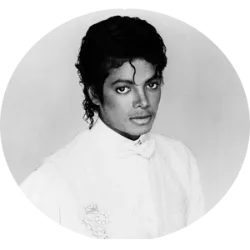
For decades, the change in Michael Jackson’s skin color was the subject of conspiracy theories and cruel criticism. However, the medical truth is far more complex and painful than tabloids suggested.
The Diagnosis of Vitiligo
What it is: Vitiligo is an autoimmune disease in which the body attacks its own melanocytes (cells that produce pigment). This causes irregular white patches on the skin.
The Progression: Michael began noticing the first patches in the 1970s. To conceal the depigmentation, he used dark makeup. However, when the patches covered most of his body, he chose to use light makeup to even out his skin tone (a medical process called depigmentation).
Lupus and Sun Sensitivity
Complementary Illness: Michael also suffered from Systemic Lupus Erythematosus. This condition worsened the vitiligo and made his skin extremely sensitive to sunlight.
Protective Style: The constant use of hats, umbrellas, and masks was not just an eccentricity, but a medical necessity to avoid severe burns and the worsening of lupus-related wounds.
Confirmation in the Autopsy (2009)
End of Speculation: After his death, the coroner’s report officially confirmed that Michael Jackson had vitiligo and lupus. The document proved that he was not trying to “change race,” but rather dealing with severe dermatological conditions.
The Interview with Oprah Winfrey (1993)
In one of the most-watched interviews in history, Oprah Winfrey heard Michael declare: “I am a Black American. I am proud of my race. I am proud of who I am. I have a skin disorder that destroys pigmentation… I can’t help it.”
The Moment That Stopped the World
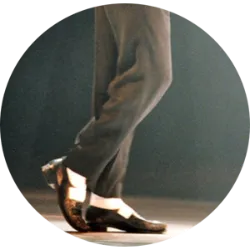
On March 25, 1983, during the television special Motown 25: Yesterday, Today, Forever, Michael Jackson delivered a performance that would change the history of dance forever.
The "Billie Jean" Glide
The Performance: After a brief reunion with his brothers, Michael remained alone on stage. Wearing a sequined glove and a sparkling black jacket, he began performing "Billie Jean."
The Move: Midway through the song, he glided backward while appearing to walk forward. It lasted only two seconds, but the audience erupted in excitement. The Moonwalk (which Michael originally called the backslide) instantly became his trademark.
Origins in Street Dance
Inspiration: Michael did not invent the move from scratch. He was inspired by young street dancers (specifically the popping style).
The Mentors: He learned the basic technique from dancers like Jeffrey Daniel and Gerone Candidate, whom he saw on the show Soul Train. However, Michael refined the step, making it smoother and more illusionary.
The Cultural Impact
Audience: More than 47 million people watched the broadcast. The next day, children and adults around the world were trying to imitate the glide on kitchen floors and in the streets.
Recognition: Fred Astaire, the legendary dance master, called Michael to congratulate him, saying: “You move in a divine way.”
Technical Perfection
The Moonwalk required perfect balance and shoes with specific soles. The secret lay in shifting body weight between the toe of one foot and the heel of the other in a synchronized motion.
HOME